20%
more store visits in a week
Watsons ran an opt-in cross-promotion. Shoppers in a neighbouring grocery zone who opted in received a timed SMS offer that pulled them into the store.
Read the caseInside Ariadne. Powered by consent and your people counting data
Ariadne Visitor Marketing is the opt-in engagement layer inside Ariadne. Once a visitor consents, you can reach them by email or message based on the zones they visited and the time they spent there, or fire an offer in real time the moment they cross a section or linger past a few minutes.


See a campaign run end to end


Visitor marketing is how a venue turns visit behavior into relevant offers. Ariadne does it consent-first: the people counting platform measures footfall anonymously, and Visitor Marketing engages only the visitors who explicitly opt in. Consent is the precondition, not the fine print.
The data underneath comes from the same Ariadne Analytics dashboard your team already uses, fed by Hybrid Fusion sensors that count people without cameras. Until a visitor opts in, there is nothing personal to market to. After they opt in, you can reach them with what they asked to hear about.
Consent first, always
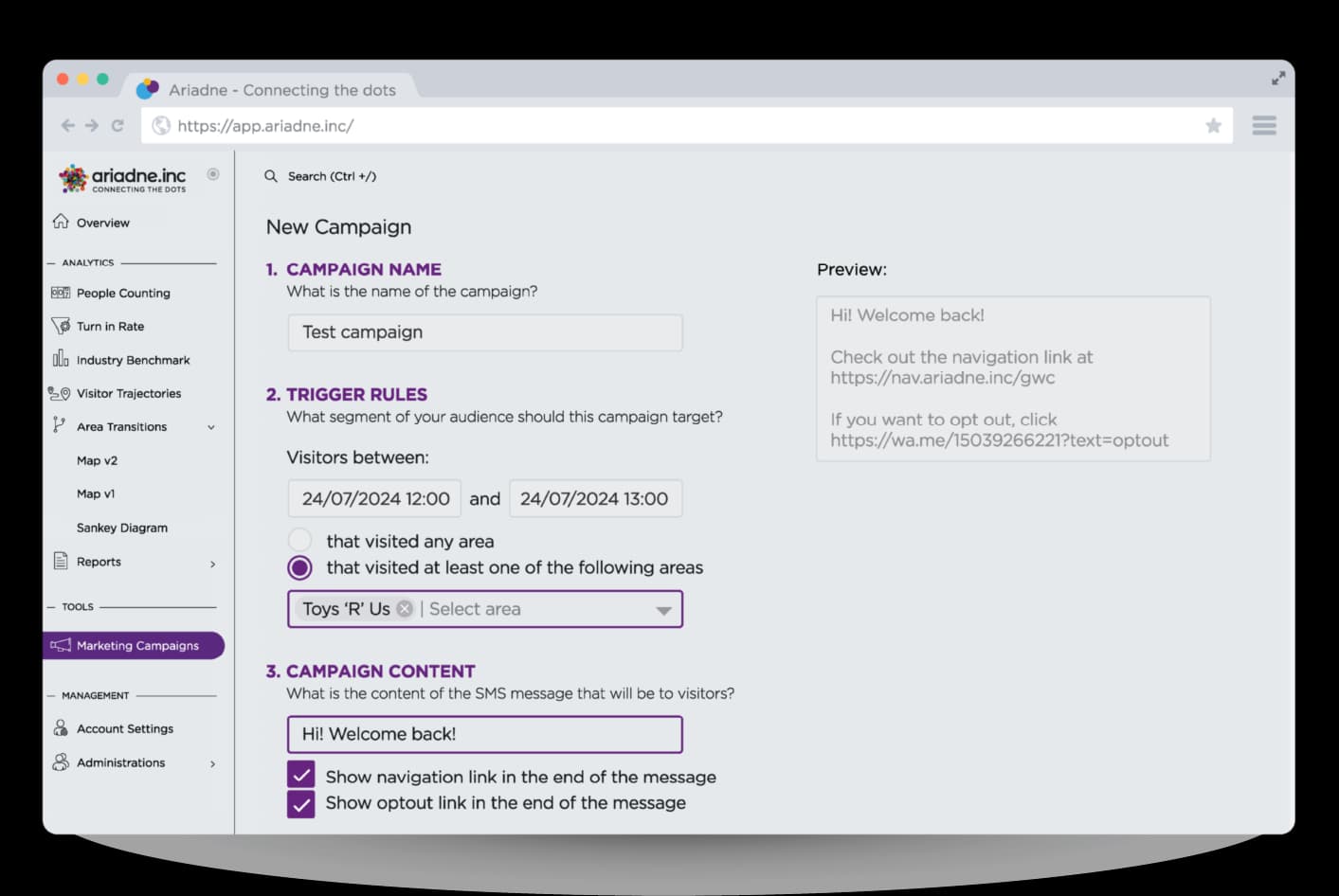
Every campaign Ariadne sends traces back to a moment the visitor chose in. Here is the path, start to finish.
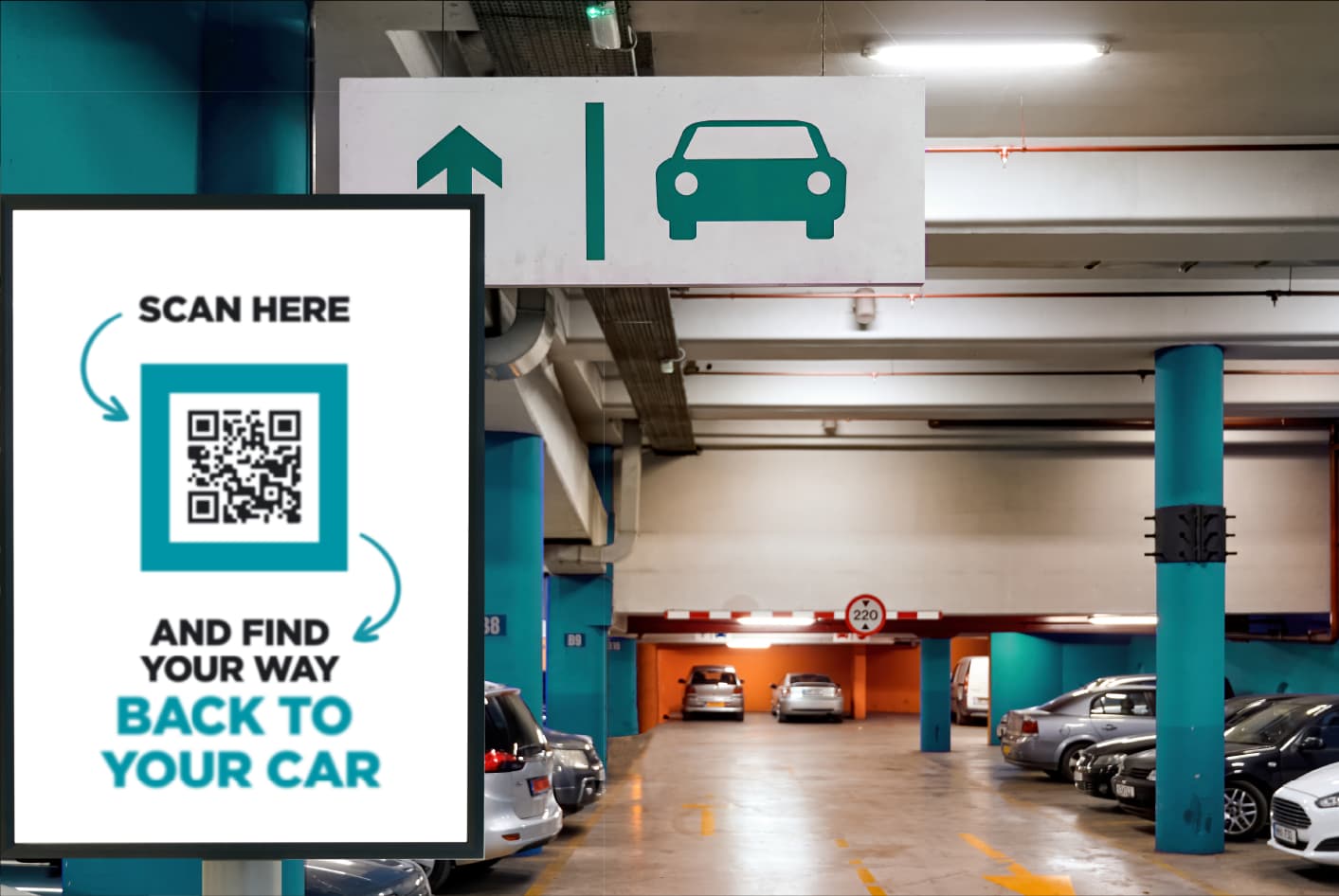
01
A visitor chooses to connect through guest Wi-Fi, a QR code, or an NFC tap. The consent is explicit, logged, and built to satisfy GDPR, CPRA, and PIPEDA. No opt-in, no profile, no message.
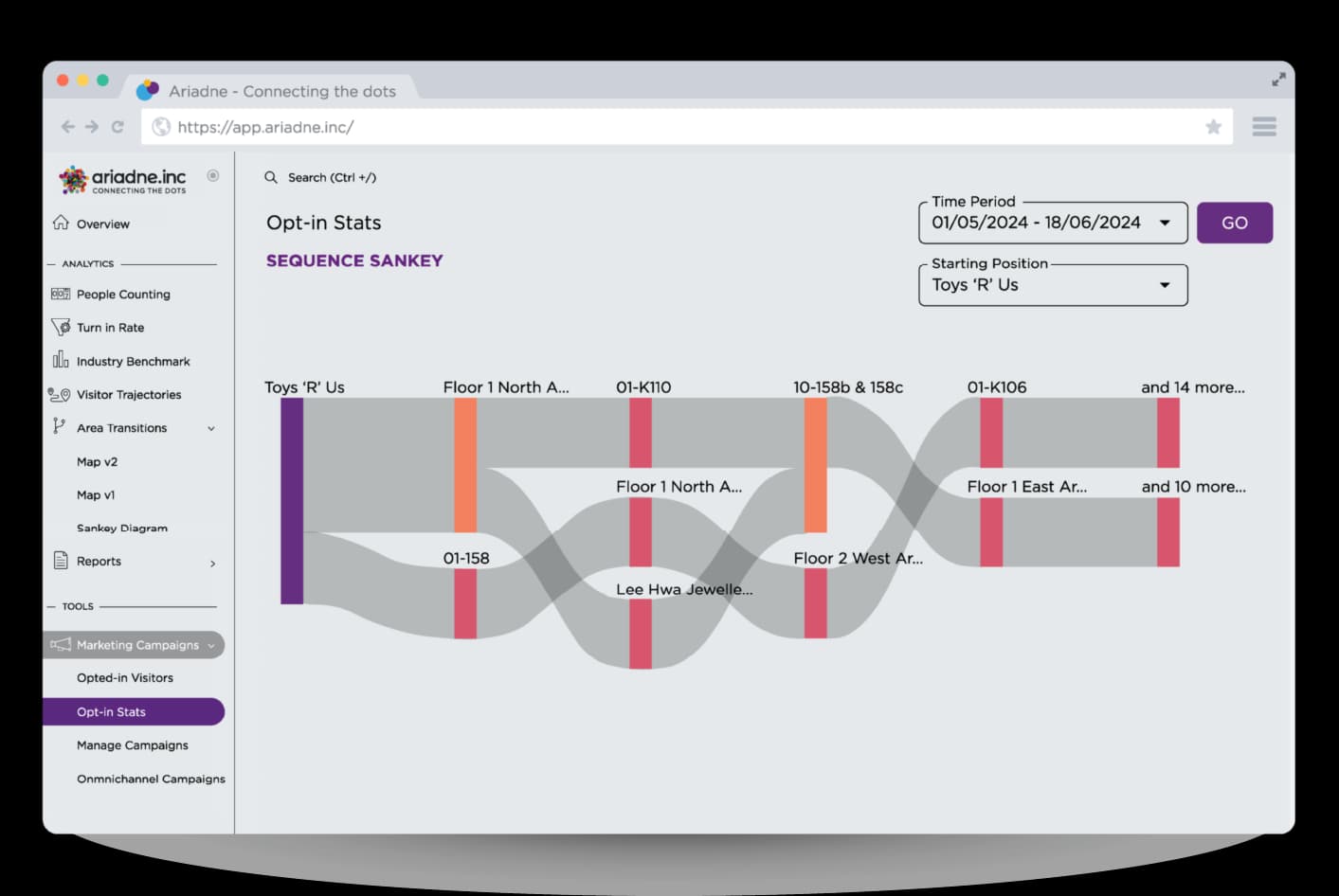
02
Once a visitor opts in, Ariadne builds a preference profile from the zones they actually engage with, and connects it to your CRM. This only ever covers consented visitors.
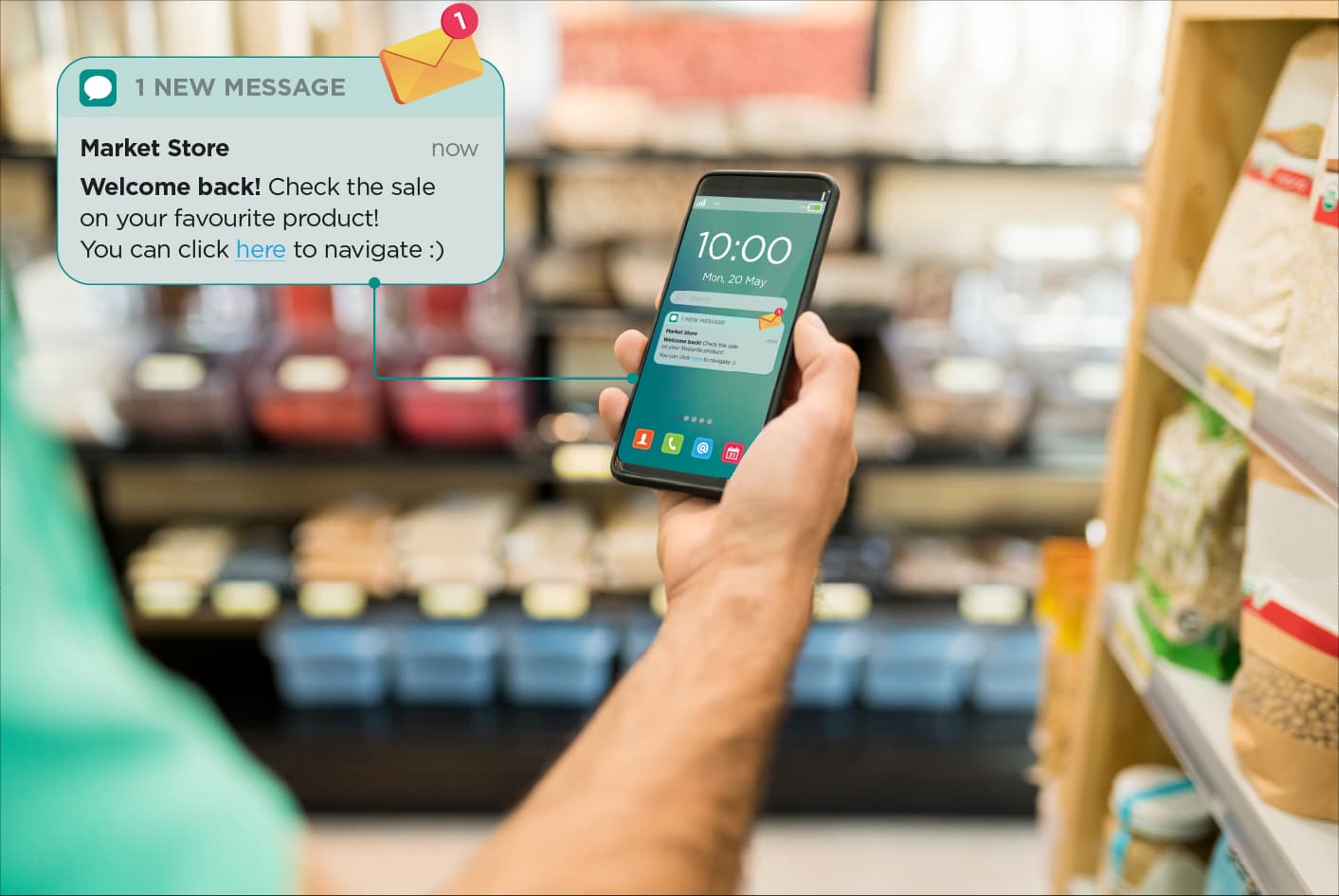
03
With consent in hand, Ariadne can fire a relevant, location-aware offer in real time, the moment the visitor crosses into a section or lingers past a set number of minutes, over SMS, push, email, or social. Relevant because it is tied to where they are and what they care about.
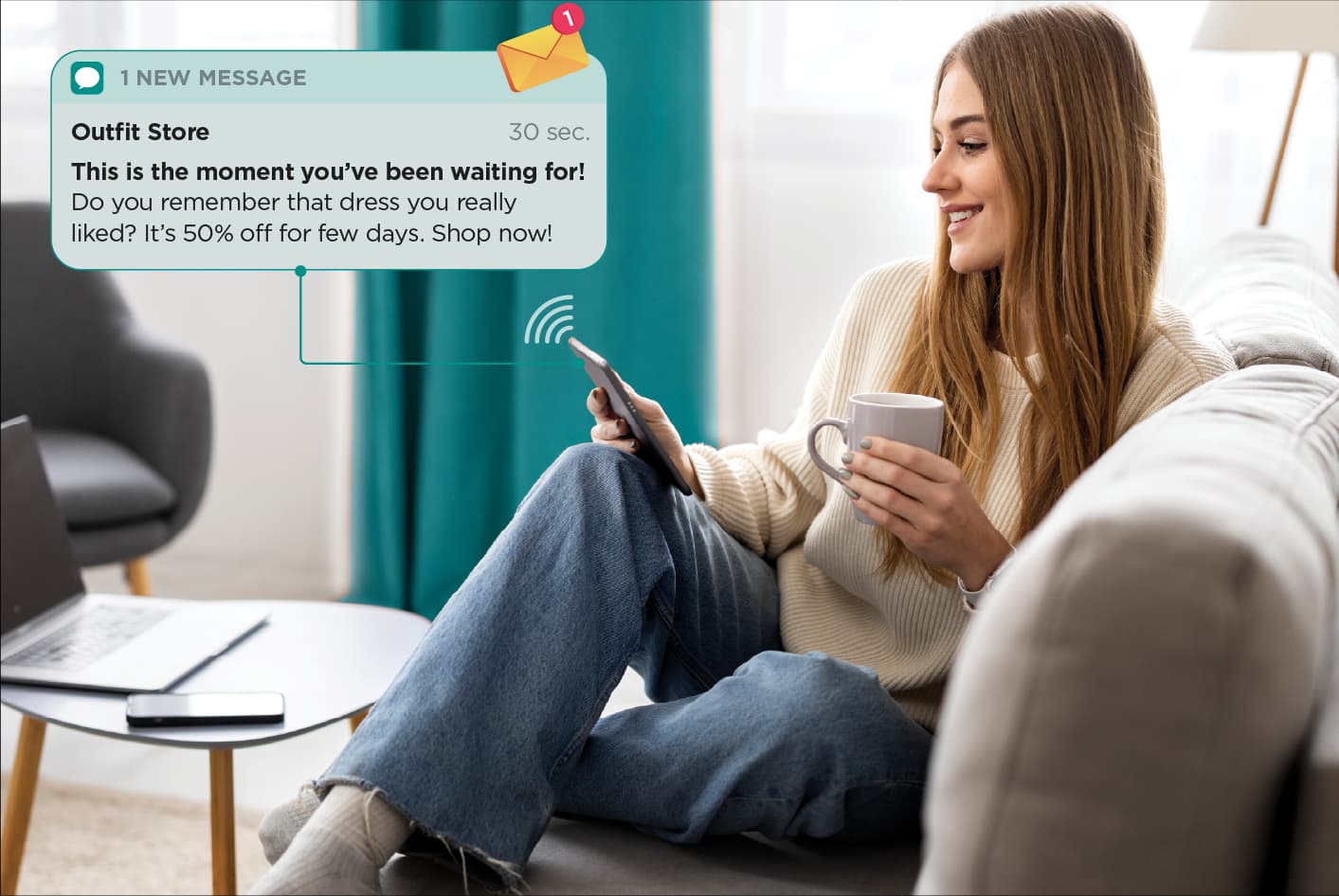
04
The relationship continues with post-visit campaigns: a follow-up offer, a reminder, a reason to come back, sent only to opted-in visitors, driving repeat and online revenue.
05
If you do not run a CRM, Ariadne provides a built-in interface to reach opted-in visitors directly, so the consent path works whatever your stack.
One opt-in, many moments
Once a visitor opts in, the same consent powers every kind of message, from a real-time nudge in the aisle to a next-day email.
Proximity
A consented visitor nears a product or display, and the offer for it arrives in the moment. Proximity marketing the visitor actually asked for.
Dwell time
Time spent in a zone becomes the cue. Stay long enough in an aisle and a relevant, real-time offer follows.
Location
After the visit, a location-based email or message tied to where they actually spent time, not a blast to your whole list.
Post-visit
A follow-up offer once they have left, driving repeat visits and online revenue from the same opted-in audience.
Why this is clean
Most location marketing starts by identifying everyone, then asks forgiveness. Ariadne starts the other way around. The counting layer never collects a personal identifier, so the building stays anonymous by default. Personalization exists only inside the circle of visitors who opted in, and they can leave that circle whenever they want. It is the same posture as the people counting platform underneath.
No cameras. No facial recognition. No demographic guessing. No PII at the sensor. Just consent, then relevance.
Consent-first vs the usual playbook
The alternative to consent-native marketing is either spraying your whole list or quietly profiling people who never agreed.
The usual playbook
Blanket CRM blasts or covert tracking
With Ariadne
Consent-first, hyperlocal
Who gets contacted
Your whole list, or anyone a camera profiled
Who gets contacted
Only visitors who explicitly opted in
Relevance
The same message to everyone
Relevance
Offers tied to the zones a consented visitor engaged with
Compliance
Bolted on after the fact
Compliance
GDPR, CPRA, and PIPEDA satisfied at the opt-in itself
The data underneath
Cameras, demographic guesses, bought lists
The data underneath
Anonymous people counting, no PII at capture
Consent, then results
Every result below started with a visitor choosing in. None of it used a camera or a bought list.
20%
more store visits in a week
Watsons ran an opt-in cross-promotion. Shoppers in a neighbouring grocery zone who opted in received a timed SMS offer that pulled them into the store.
Read the case46.3%
click-through, half opted in
At the NRF Big Show, 1,900 attendees scanned QR codes that doubled as the opt-in. Nearly half joined the marketing pool, at a 46.3% click-through rate.
Read the case~30%
store-visit lift around a concert
An electronics retailer timed an event-anchored SMS campaign to a Taylor Swift concert in Singapore and saw roughly a 30% rise in store visits within the week.
Read the caseWe recorded the ROI already in the first month with a 40% increase in product revenue.
Where consented engagement pays off
Turn an opted-in shopper into a same-day return with an offer tied to the aisle they lingered in.
Give tenants a consented channel to reach the visitors already walking the mall.
Glasgow Airport turned dwell time into 54,000 GBP in extra non-aeronautical revenue a day.
FAQ
It is the engagement layer inside Ariadne that activates after a visitor opts in. Once they consent, you can reach them by email or message based on the zones they visited and the time they spent there, or fire a real-time offer the moment they cross a section or linger past a few minutes.
No. Nothing fires without explicit consent. Until a visitor opts in through Wi-Fi, a QR code, or NFC, there is no profile and no message. The counting layer stays anonymous.
Through guest Wi-Fi, a QR code, or an NFC tap. The consent is explicit and logged, and the flow is built to satisfy GDPR, CPRA, and PIPEDA.
Consent is the legal basis. Ariadne relies on the visitor's explicit opt-in under GDPR Article 6(1)(a), captured to the standard of Article 7: freely given, specific, informed, and unambiguous, and as easy to withdraw as it was to give (Article 7(3)). The platform is built privacy by design and by default (Article 25) and processes only the data a campaign needs (data minimisation, Article 5(1)(c)). Visitors keep the right to object (Article 21) and the right to erasure (Article 17). The people counting layer underneath holds no personal identifier, so until someone opts in there is no personal data to process. Because the messages go out by SMS or email, the opt-in also satisfies the ePrivacy Directive (2002/58/EC, Article 13), which requires prior consent for electronic marketing.
Yes. Opted-in profiles connect to your existing CRM. If you do not run one, Ariadne includes a built-in interface to reach consented visitors directly.
Yes. Because engagement is tied to consented visits and their zones, you can connect in-building and post-visit campaigns to repeat visits and sales. Weko recorded a 40% increase in product revenue, and a Watsons opt-in campaign lifted store visits 20% in a week.
No. Ariadne uses no cameras and makes no demographic guesses. Personalization exists only for visitors who opted in, on data that carries no personal identifier at capture.
Resources
Field reports from real customers, technical deep-dives on how Hybrid Fusion actually behaves, and the occasional opinion piece.
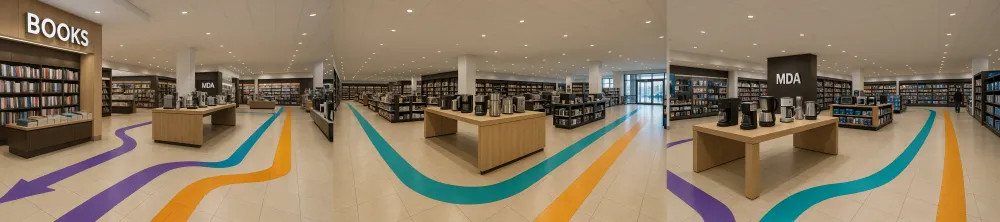
Loop, racetrack, free-flow, and grid: the four shopper flow patterns explained, with retailer examples and a worked store walkthrough.

How airports use in-airport behavior analytics for post-visit marketing: CRM integration, audience retargeting, and non-aero revenue from passenger ROI.

How a hardware store doubled revenue by optimizing billboard campaigns: smarter locations, mission-based creative, timing, and repeat-visit follow-up.
Two questions, twenty minutes, a real walkthrough of your venue's footfall.
What to expect
Got a different question?
Anything that isn't a sales conversation. We'll route it to the right person and get back within one business day.