Airports
Get passengers from check-in to the right gate, and to the shops in between.
Wayfinding inside Ariadne. Built on your existing Wi-Fi
Ariadne indoor navigation is browser-based wayfinding. Anyone can open the map, search for a store, gate, or product, and follow the route there, with no app and no login. When a visitor opts in, a live blue dot shows where they are and the route follows them. It runs on your existing Wi-Fi, camera-free, and positions a visitor only when they choose in.


See wayfinding in action


Indoor navigation is how a visitor finds their way inside a building the way a map app guides them outdoors. Ariadne does it without an app: anyone can open the map in their browser and follow a route to where they want to go. When a visitor opts in, a live blue dot shows exactly where they are, on your existing Wi-Fi.
It comes from the same privacy-first platform as Ariadne's people counting, built camera-free on patented signal sensing. Wayfinding works for everyone; the live blue dot positions a visitor only after they opt in. Until then there is no camera, no login, and no personal identifier.
From the front door to the right aisle
No download, no account, no kiosk queue. Anyone can open the map and find the way. Opt in, and a live blue dot follows them.
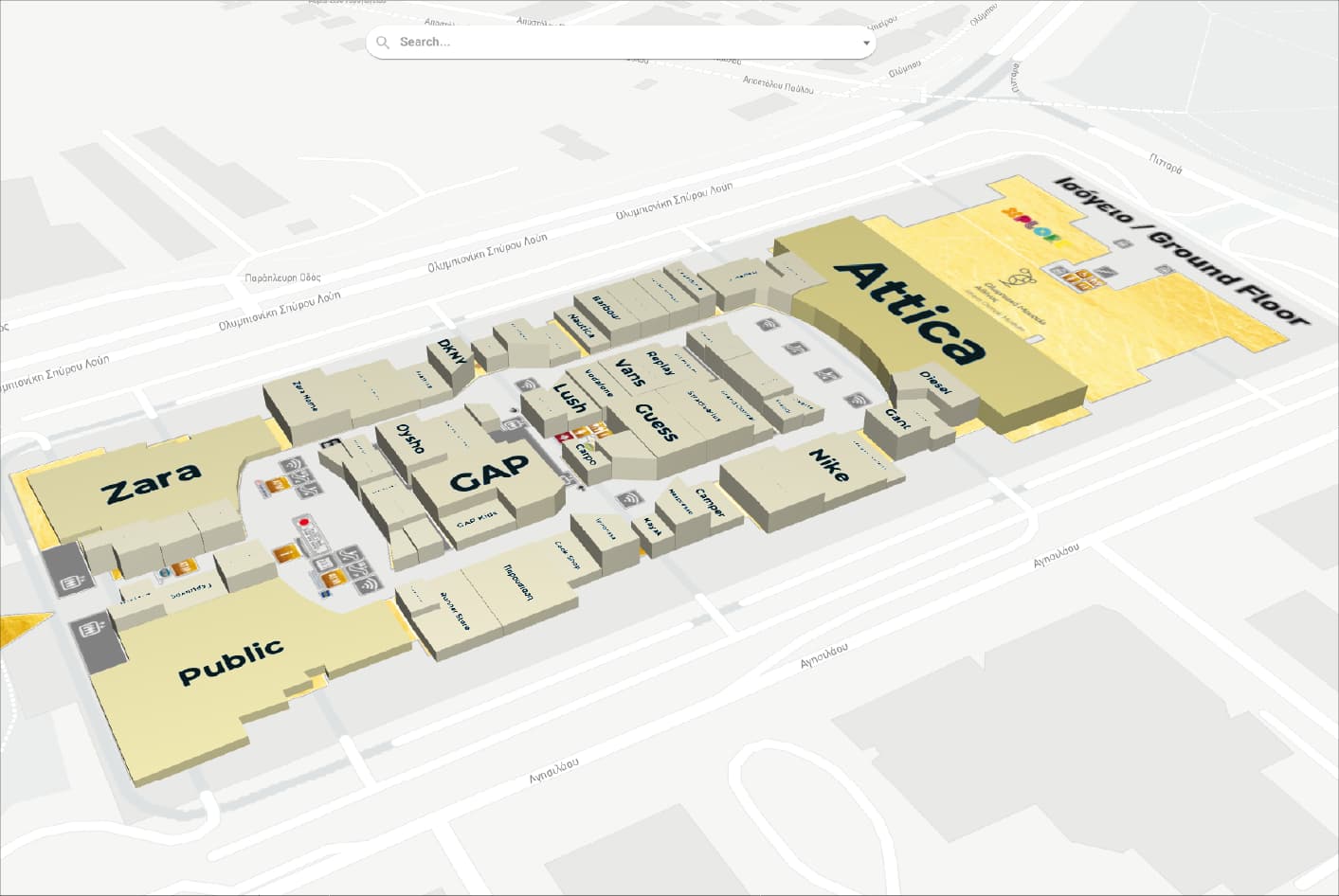
01
Ariadne builds a digital map of the building, and an optional 3D model, so every store, gate, room, and product has a place on it.
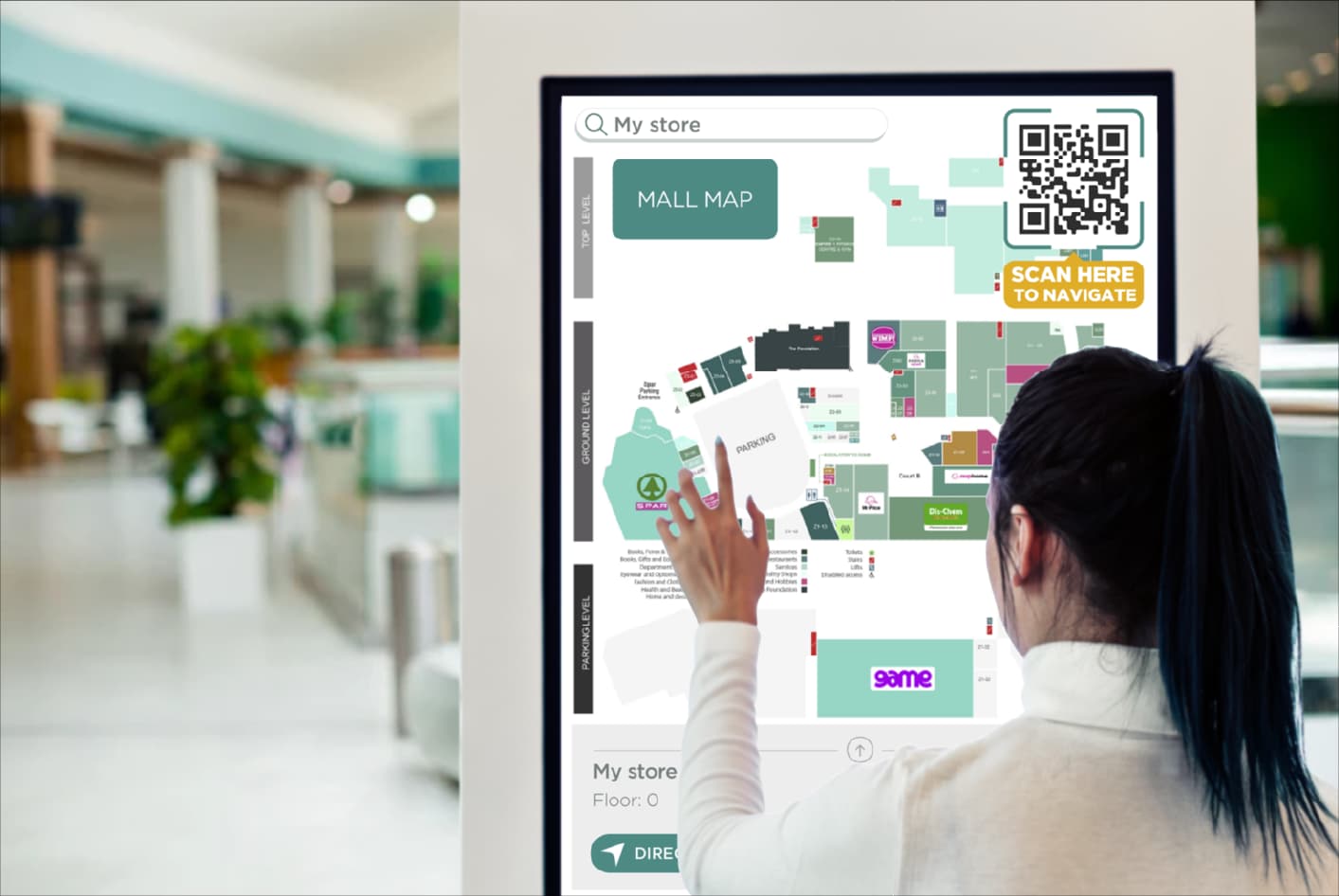
02
A QR code, a link, or a wayfinding kiosk opens the map. There is nothing to install and no account to create.
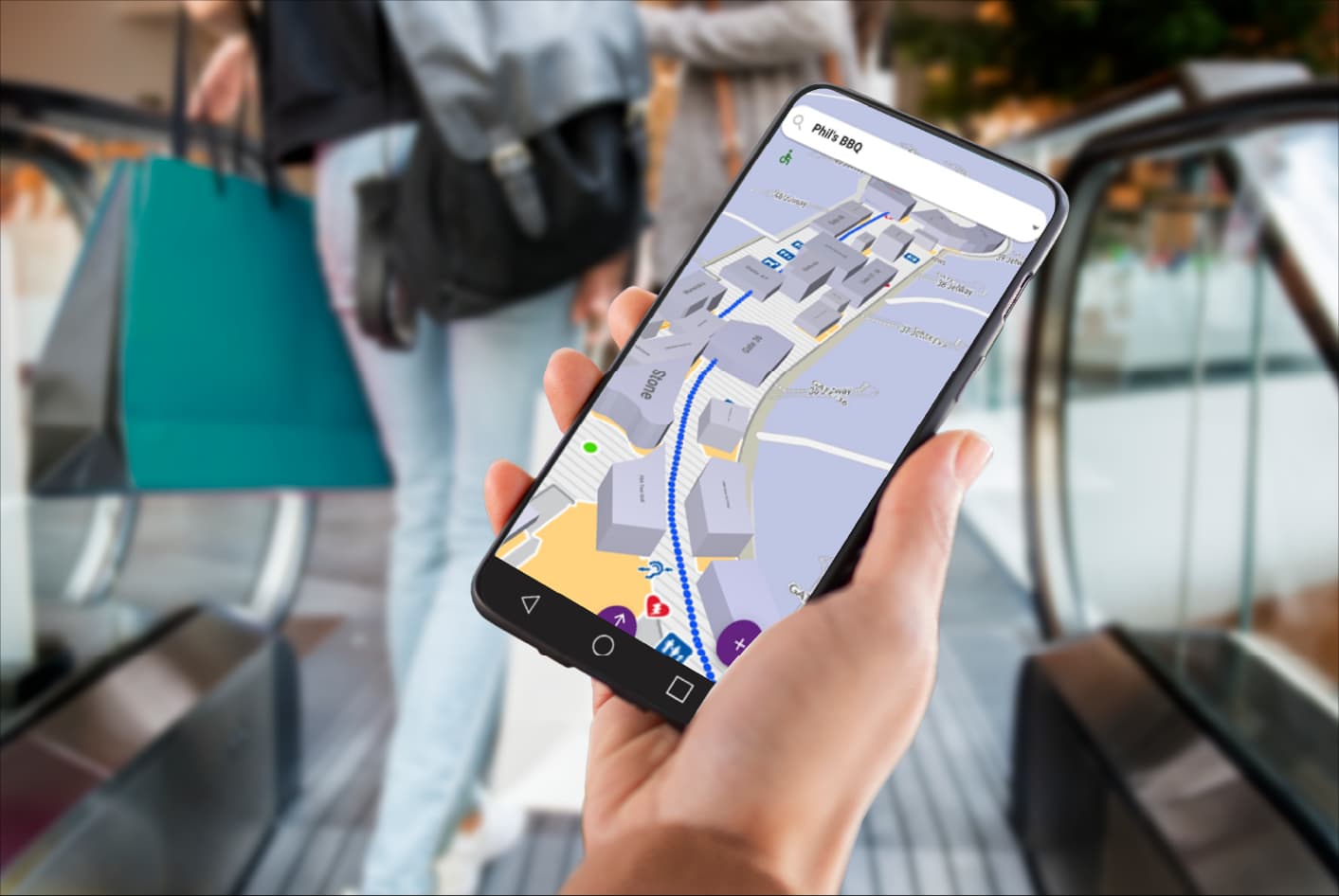
03
The visitor searches for a store, gate, or product and a route draws on the map. This works for everyone, with no opt-in. Routes can be spoken aloud and shown visually, so visitors with disabilities can follow them too.
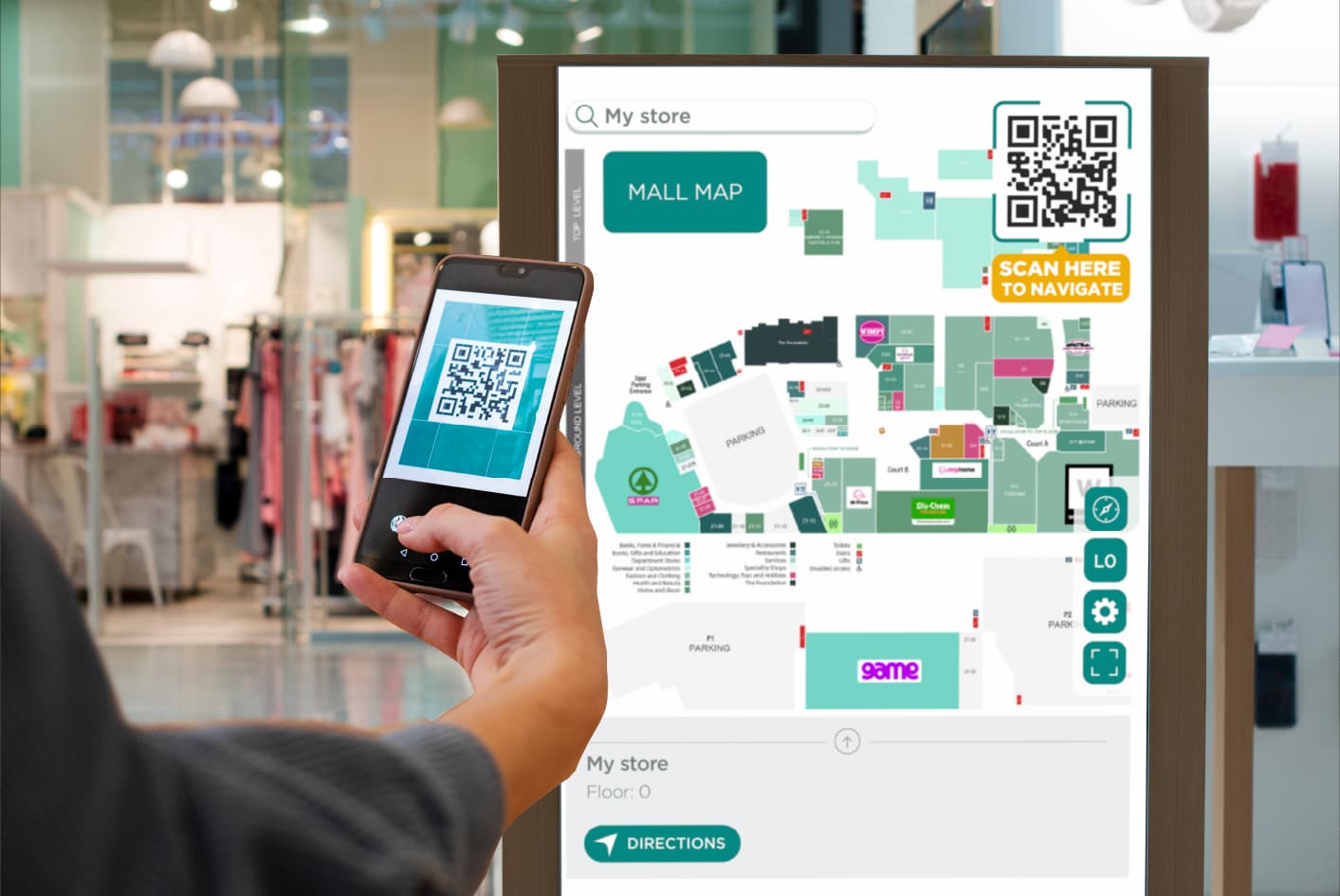
04
When a visitor opts in, the existing Wi-Fi through EaseLink, or Ariadne's own sensors, positions their device, so a live blue dot shows where they are and the route follows them. It works the same on iPhone and Android, with no camera and no GPS.
Why this is clean
Most indoor positioning starts by identifying the device or the person. Ariadne starts the other way around. Wayfinding works for everyone without identifying anyone, and the live blue dot positions a visitor only after they opt in, computed on their own device. The counting layer underneath stays anonymous by default, the same posture as the people counting platform.
No app. No login to find your way. No cameras. No fingerprints. No positioning until a visitor opts in.
And it is built to be followed by everyone: routes can be spoken aloud and shown visually, so visitors with disabilities can find their way too.
Beyond the blue dot
The same map that guides visitors can be built as a 3D model of the venue: a visual digital twin your team uses to plan layouts, place tenants, and analyze how the space works. It is optional, and the wayfinding works with or without it. The model lives alongside the Ariadne Analytics dashboard, so planning and live data sit in one place.
Blue dot vs the usual indoor setups
The usual ways to do indoor navigation ask the visitor to download something, or ask the venue to install and maintain hardware. Ariadne asks for neither.
The usual setup
Downloads and battery hardware
With Ariadne
Browser-based, no app
Getting started
The visitor downloads and opens an app
Getting started
Opens in the browser, nothing to install
Venue hardware
Battery beacons to deploy and replace
Venue hardware
Runs on the Wi-Fi you already have, or on Ariadne's own sensors
Privacy
Accounts, logins, device identifiers
Privacy
No login, no PII, camera-free
Reach
A separate build per phone platform
Reach
One web experience on iPhone and Android
Where wayfinding earns its keep
Get passengers from check-in to the right gate, and to the shops in between.
Help visitors find any tenant, and help tenants get found.
Route shoppers straight to the product they came for.
FAQ
It is browser-based wayfinding. Anyone can search for a store, gate, or product and follow the route to it, running on the venue's existing Wi-Fi with no app. When a visitor opts in, a live blue dot also shows where they are, and no personal data is collected unless they choose in.
No. Visitors open a link, a QR code, or a kiosk in their phone's browser. There is nothing to download and no account to create.
Yes. Wayfinding, searching a destination and following the route, works for everyone with no opt-in. The live blue dot that shows a visitor's own position appears once they opt in. Positioning then runs on the venue's existing Wi-Fi through EaseLink, or on Ariadne's own sensors, without GPS or any camera.
Yes. It is one web experience that runs the same on both, with no separate app to maintain per platform.
No. Wayfinding identifies no one. The live blue dot positions a visitor only after they opt in, computed without a login or a device fingerprint, and the people counting platform underneath stays anonymous by default.
Yes. Routes can be spoken aloud and shown visually, so visitors who cannot rely on the on-screen map can still follow the way to where they are going.
A digital twin is an optional 3D model map of your venue that your team can use to plan layouts and analyze the space. The wayfinding works with or without it.
Resources
Field reports from real customers, technical deep-dives on how Hybrid Fusion actually behaves, and the occasional opinion piece.
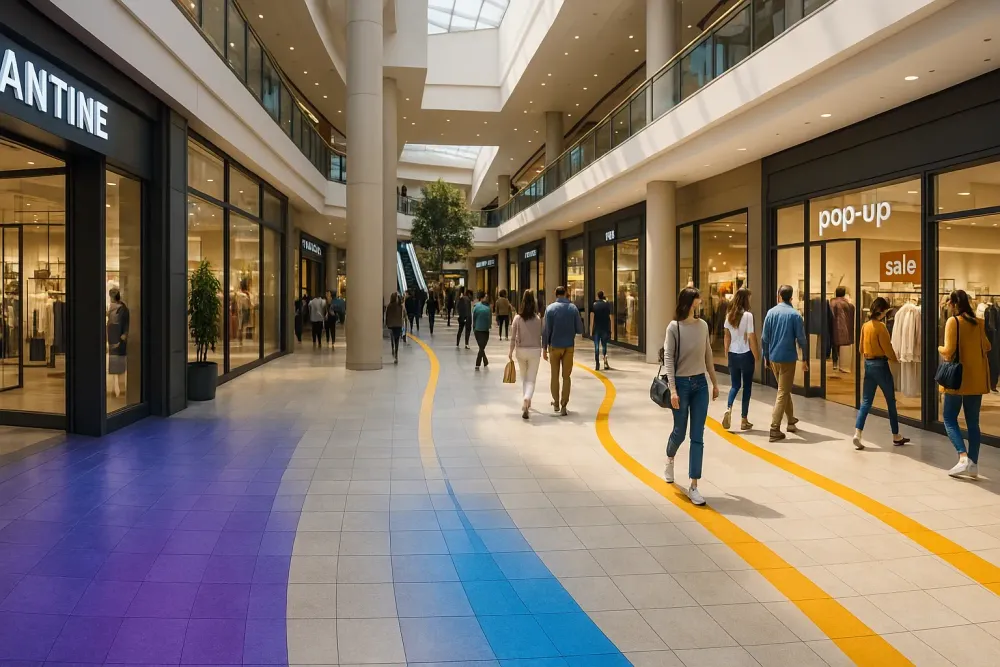
How shopping malls stay competitive: pop-up store rotation, tenant mix data, real-time visitor analytics, and engagement features that drive return visits.

Indoor navigation for malls, airports, hospitals and stadiums. BLE vs UWB vs visual positioning compared, accuracy, accessibility, 2026 update.

Compare BLE beacons, UWB, visual, and Wi-Fi plus BLE signal-pattern positioning on accuracy, cost, infrastructure, scale, energy, and privacy.
Two questions, twenty minutes, a real walkthrough of your venue's footfall.
What to expect
Got a different question?
Anything that isn't a sales conversation. We'll route it to the right person and get back within one business day.